Reliable Precision Subcontractor for Tool Shops







Tungsten Carbide Punches vs Tool Steel Punches
Which Is Better for Precision Stamping Applications?
In precision metal stamping, punch materials impact tool life, stamping stability, maintenance cost and overall production efficiency. Tungsten carbide punches and tool steel punches are widely used. In this article, we will explain the key differences between tunsten carbide and tool steel punches to help engineers to choose the right material.
1. Overview of Punch Materials in Stamping Dies
Stamping die punches are long suffered from repeated impact, friction, and wear. Different punch materials are required depending on the stamping material, production volume, and die structure.
Tool steel punches and tungsten carbide punches have their different advantages and limitations.

2. Tool Steel Punches
Tool steel punches are widely used because of their good balance of hardness, toughness and cost. Their key benefits include:
Common tool steels:
Typical Applications:
3.Tungsten Carbide Punches

Tungsten carbide punches offer extremely high hardness and wear resistance. They are ideal for stamping conditions. Their key benefits include:
It’s worth noting that carbide is more brittle than tool steel and requires precise manufacturing control.
Typical Applications:
4. Tungsten Carbide vs Tool Steel
| Item | Tungsten Carbide Punch | Tool Steel Punch |
|---|---|---|
| Hardness | Very high | Medium to high |
| Wear Resistance | Excellent | Good |
| Toughness | Lower | Higher |
| Tool Life | Very long | Moderate |
| Cost | Higher | Lower |
| Machinability | Difficult | Easier |
| Best for | High-volume, precision | General stamping |
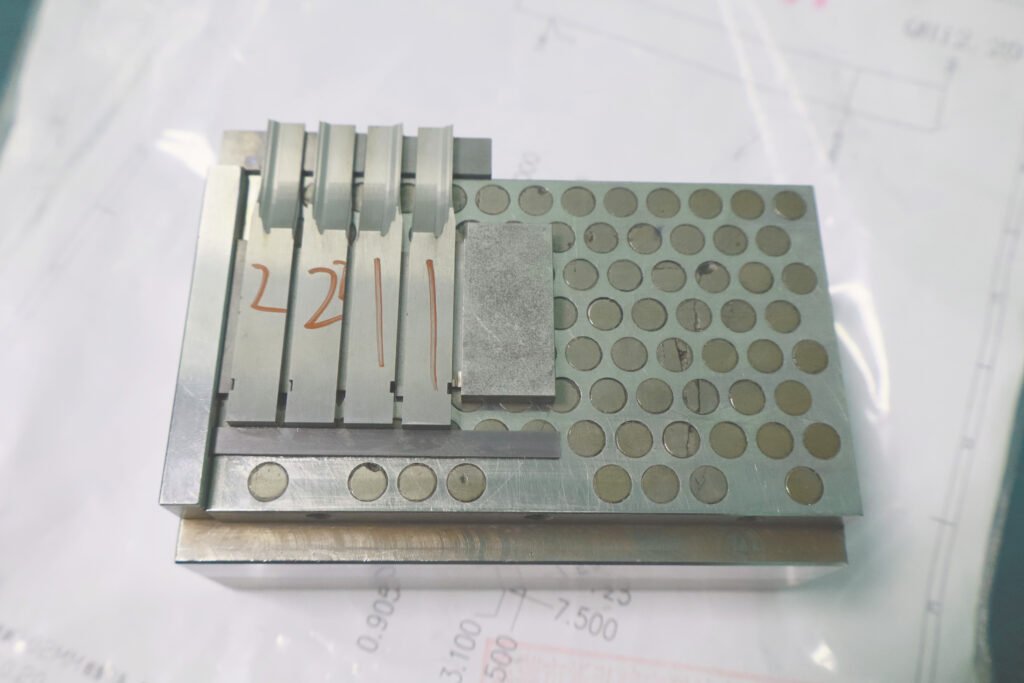


5. Value of PG Profile Grinding in Punch Performance
Regardless of material choice, manufacturing process plays a critical role in punch performance.
Critical Applications for PG Profile Grinding:
- Non-standard punch shapes
- Tight tolerance requirements
- Micro punches (2–3 mm or smaller)
- Replacement punches requiring high repeatability
PG grinding allows precise control of:
- Punch profile geometry
- Edge straightness
- Surface finish
- Dimensional accuracy
PG grinding is particularly critical for tungsten carbide punches, as other conventional machining methods may not provide sufficient accuracy or consistency.
6. How to Choose the Right Punch Material
When selecting between tungsten carbide and tool steel punches, following factors are considerable :
Yes it shows, tool steel punches are suitable for trial dies or lower-volume production. Tungsten carbide punches provide better long-term value in mass production environments.
7. Drawing-Based Customization Matters
For non-standard punches, material selection should never be isolated from punch design. A reliable punch supplier should:
Conclusion
In stamping industry, there is no single “best” punch material for all applications.
Tool steel punches offer flexibility and cost advantages, while tungsten carbide punches excel in wear resistance and long-term stability.
By combining the right material selection with PG Profile Grinding, precision punch performance can be significantly improved, helping reduce downtime, improve part consistency, and extend die life.
 English
  Korean
  Japanese
  Spanish
  Portuguese
  French
  German