






工具工場向けの信頼できる精密下請業者
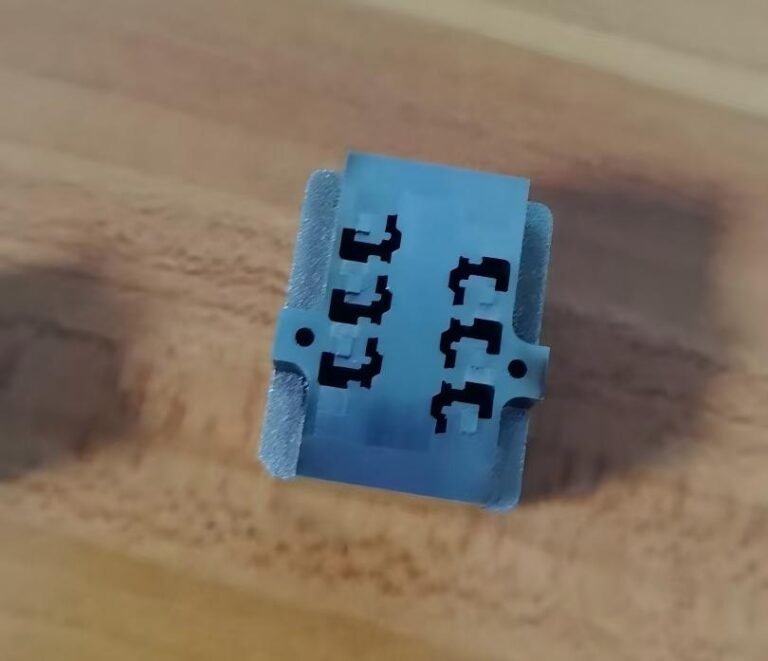
Precision Fit Insert for Mold and Stamping Die Applications
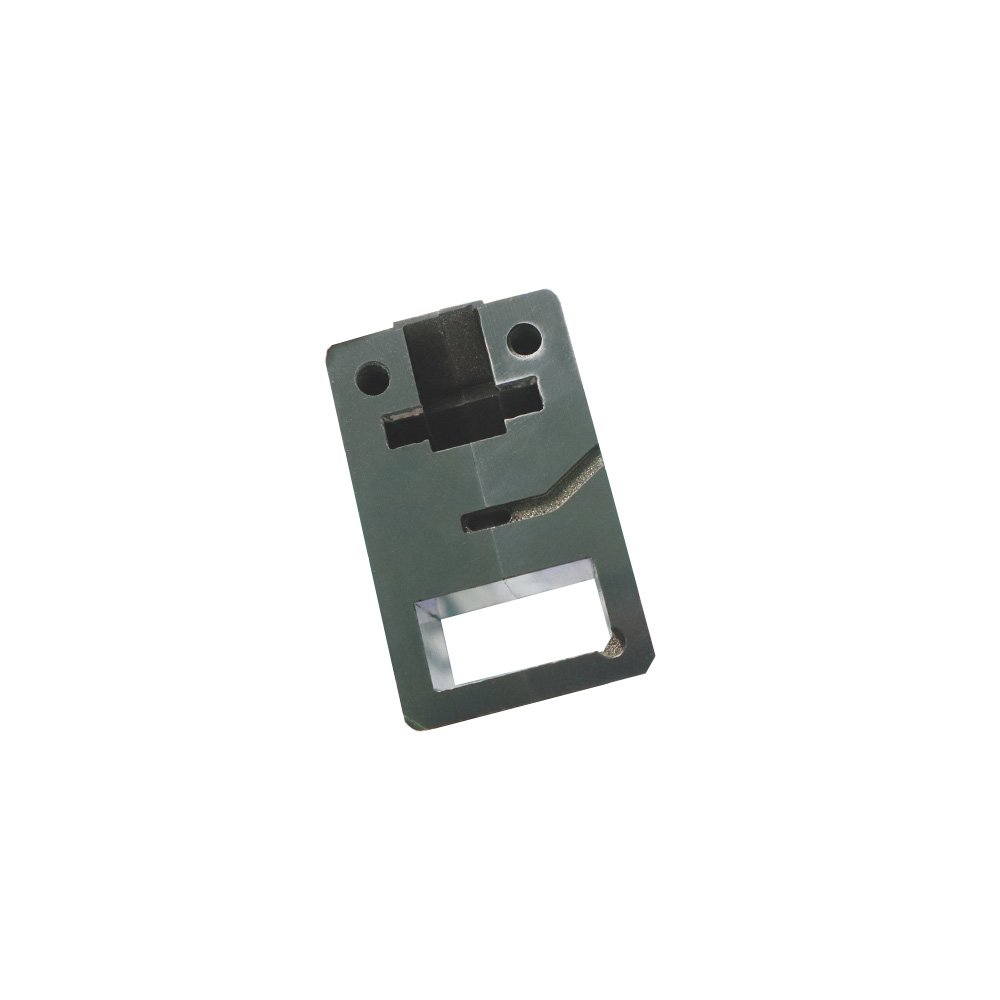
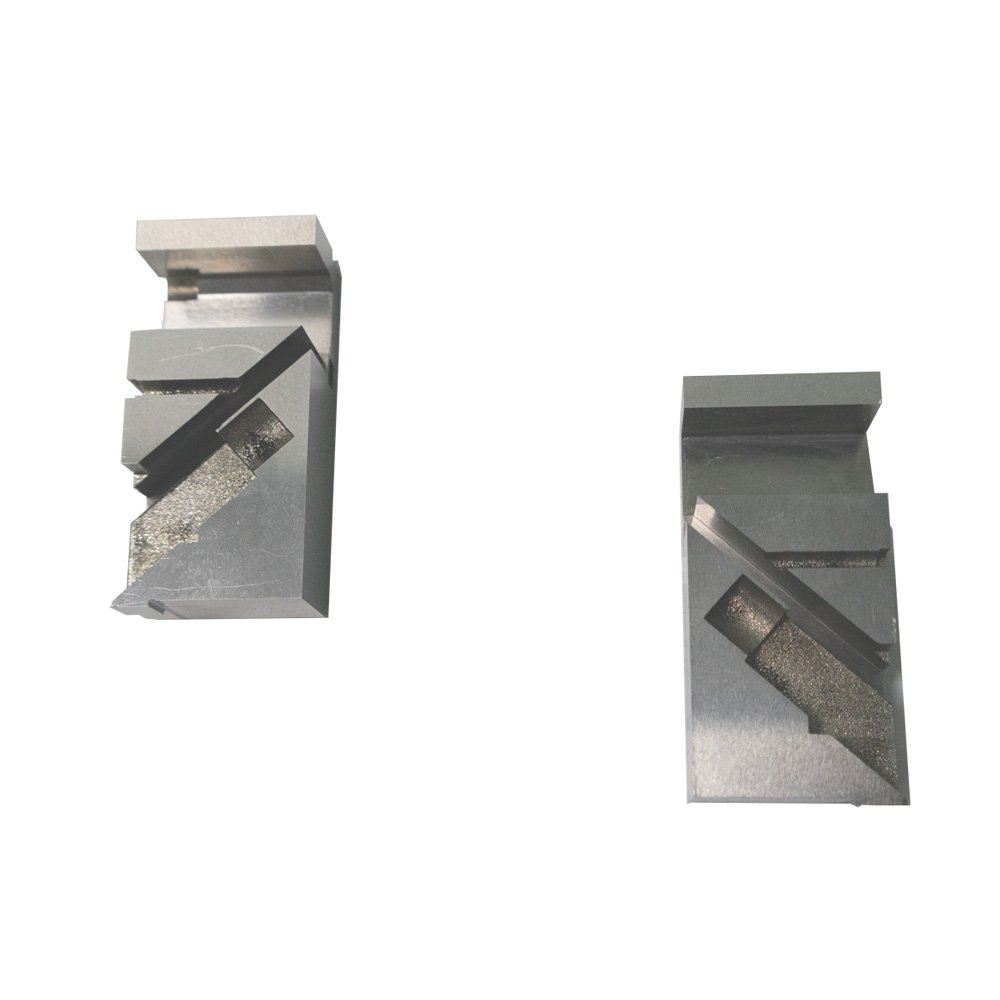
Custom Precision Fit Insert manufactured using grinding, sinker EDM, and PG profile grinding. For accurate fit, stable assembly mold.
Accurate Fit and Dimensional Stability
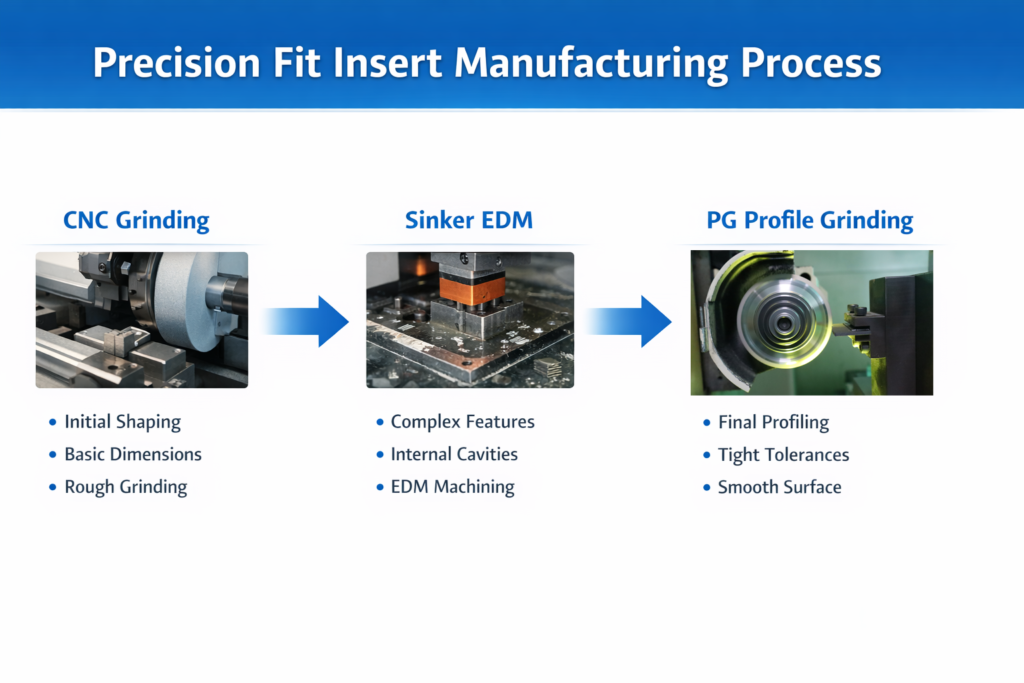
Manufacturing Process of Precision Fit Insert
① Grinding
During grinding, insert blank is machined to establish the basic geometry, reference surfaces, and critical dimensions. This step provides dimensional stability and works out the component for subsequent precision machining.
② Sinker EDM
This step creates complex features, internal shapes, or non-standard profiles that conventional grinding cannot be achieve alone. Sinker EDM can help removal accurate material in hardened materials. At the same time, it maintains geometric integrity, and thus is suitable for applications of precision inserts.
③ PG Grinding
This final stage finish critical external profiles, radius transitions, and functional surfaces. PG profile grinding achieves tight tolerances, consistent profile accuracy, and smooth surface quality. These are very important for precision fitting and stable operation within the mold assembly.

Grinding+EDM+PG Finishing allows the Precision Fit Insert to achieve reliable dimensional control, reduced assembly adjustment, and improved wear resistance during production.
Precision Fit Insert – Technical Specifications
| 項目 | Specification |
| Product Type | Precision Fit Insert |
| Manufacturing Process | Grinding → Sinker EDM → PG Profile Grinding |
| Dimensional Tolerance | Up to ±0.001 mm (critical dimensions) |
| Profile Accuracy | High-precision profile control by PG grinding |
| Radius (R) Tolerance | Controlled and consistent radii per drawing |
| Surface Roughness (Ra) | Ra 0.2 – 0.4 μm (PG finished surfaces) |
| Flatness / Parallelism | ≤ 0.002 mm (depending on size & design) |
| Size Range | Custom, non-standard inserts supported |
| Minimum Feature Size | Subject to design, micro features supported |
| Heat Treatment Condition | Soft or hardened condition available |
| Inspection Method | Optical inspection, precision gauges, profile measurement |
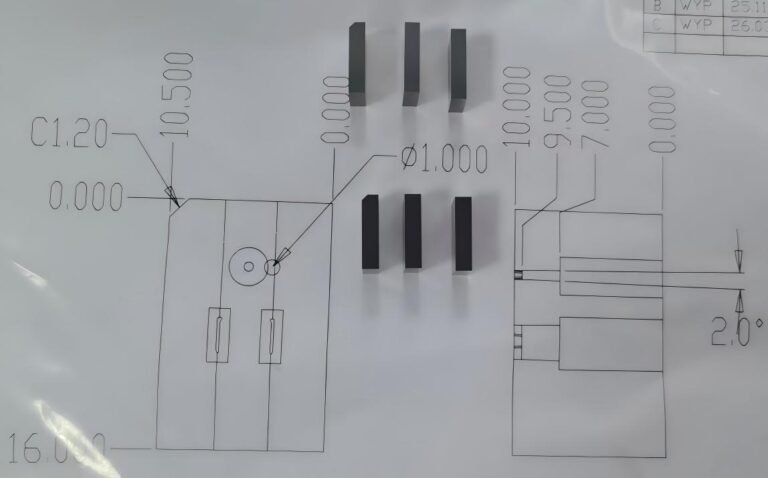
| Drawing Standard | Customer drawing or sample-based manufacturing |


Available Materials for Mold Inserts
| Material | Description / Application |
| SKD11 (D2) | High wear resistance, common for stamping dies |
| DC53 | Improved toughness and wear resistance |
| SKH51 / M2 | High-speed steel for demanding applications |
| SKH9 | Suitable for high-load tooling |
| Tungsten Steel (Carbide)* | High hardness for specific applications |
| Customer-Specified Tool Steel | Available upon request |
*Carbide inserts subject to design feasibility.
Final specifications are confirmed based on drawing review and application requirements.
FAQs
We typically achieve ±0.002 mm tolerance with PG optical profile grinding.For simpler geometries or specific critical features, tolerance can reach to ±0.001mm. Final capability depends on part geometry, material, and profile complexity.
We typically grind radii as small as R0.02 mm (tool steel) and R0.01 mm (carbide).
All sharp corners are produced with a controlled micro-radius for durability and performance.
Yes. We specialize in complex and asymmetric PG-ground profiles, including compound curves and non-symmetrical shapes.
Carbide (Tungsten carbide) KR466,CD650,KD20
SKD11 / D2
SKH9 / M2
DC53
Powder steel
Yes. We regularly support connector molds and precision stamping dies, including fine-pitch and high-wear punch applications.
We accept UG,CAD,DWG files are preferred for complex PG profiles.
Normally 2-3days for production. The actual lead time will according to your design and quantity.
We have no strict MOQ, prototype & small batches are welcomed.
Customer drawings are treated as confidential, used only for production, and never shared with third parties. NDAs are available upon request.
PG optical profile grinding provides significantly higher profile accuracy and repeatability than standard grinding, especially for parts with complex contours and functional edges.
Compared with standard grinding, PG grinding offers:
Superior profile accuracy for curves, angles, and asymmetric shapes
Direct optical profile verification during grinding
Cleaner, sharper cutting edges with controlled micro-radius
Better consistency across multiple identical parts
Standard grinding is well suited for straight surfaces and simple geometries.
However, when the function of a punch or insert depends on precise contour shape, PG optical profile grinding ensures the profile matches the design intent exactly.
For precision molds, connector tooling, and fine-pitch stamping applications, PG grinding often results in more stable performance and longer tool life.