Reliable Precision Subcontractor for Tool Shops



Precision Punch Manufacturing: From Preparation to Profile Grinding
Precision punch manufacturing involves more than machining a part to its nominal dimensions. For stamping die applications, the manufacturing route must account for material properties, geometry, critical tolerances and the functional requirements of the finished component.
Depending on the part, this may involve CNC machining, heat treatment, Wire EDM, Sinker EDM, surface grinding and precision Profile Grinding.
Each process serves a different purpose. The key is to select and coordinate the appropriate processes to achieve the required geometry, dimensional accuracy and surface condition.
At Hepha Precision, we focus on precision Profile Grinding, Wire EDM and precision EDM for stamping die punches, die inserts and other critical tooling components. Our manufacturing approach is guided by the drawing and the requirements of each part.
1. What Determines the Manufacturing Route of a Precision Punch?
Not every precision punch requires the same sequence of operations.
Before manufacturing begins, several factors need to be considered:
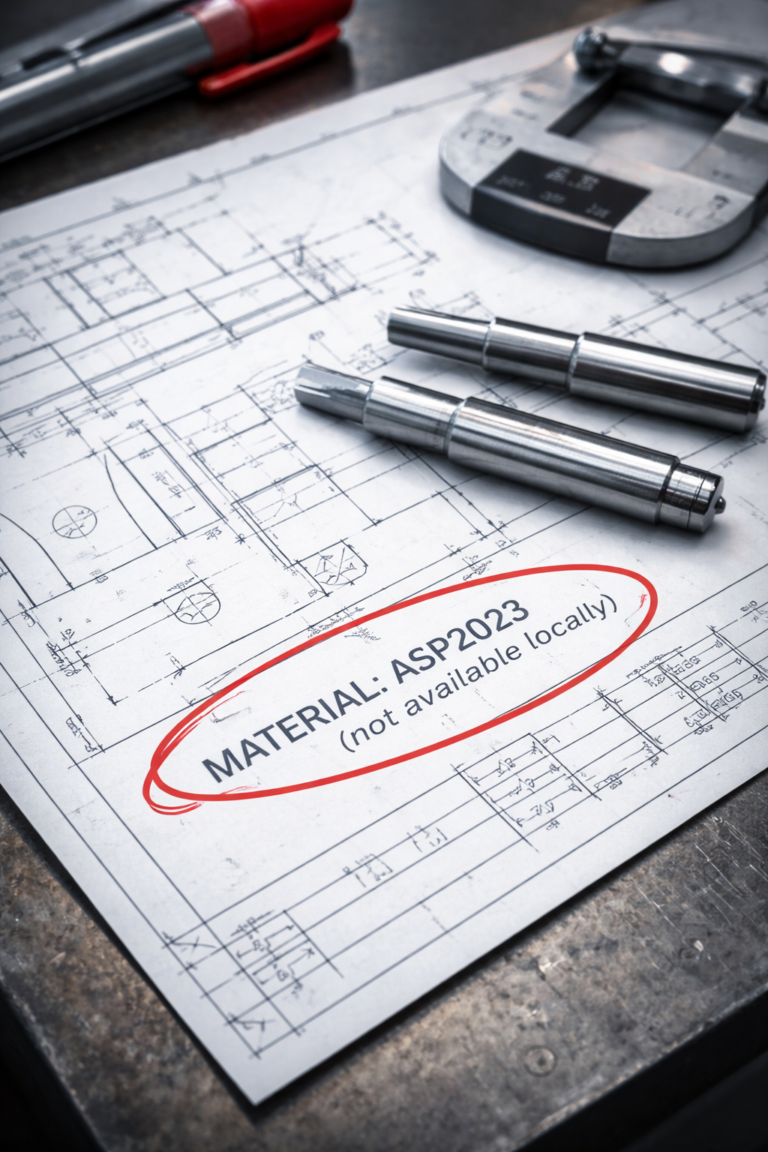
- Material: Tool steel, high-speed steel and tungsten carbide have different machining characteristics.
- Geometry: Profiles, radii, steps, slots and transitions influence which processes are suitable.
- Dimensional requirements: Critical dimensions and geometric tolerances determine how the part must be positioned, machined and inspected.
- Hardness and material condition: Heat treatment requirements can affect the sequence of operations and subsequent dimensional control.
- Functional requirements: The working profile, locating surfaces and mating features may require different machining and inspection approaches.
A suitable manufacturing route is therefore determined by the part’s actual requirements, rather than by using the same process sequence for every component.
2. Material Preparation and Initial Machining
Depending on the drawing and starting material, initial machining may include CNC milling, drilling, cutting or other operations to establish the basic shape and remove excess material.
These operations prepare the component for subsequent precision machining. However, the amount and type of initial machining depend on the geometry, material and required final condition.
For some parts, extensive initial machining may be necessary. For others, a simpler route may be sufficient.
The objective is to establish suitable conditions for the following operations without introducing unnecessary steps into the manufacturing process.
3. Heat Treatment and Dimensional Control
For tool steel components that require hardening, heat treatment is an important consideration in the manufacturing route.
The specified material, hardness, component geometry and dimensional requirements all influence how heat treatment is arranged relative to the machining operations.
Because heat treatment can affect dimensions and shape, the process sequence must allow for the requirements of subsequent finishing operations.
Not every component requires heat treatment, and different materials may require different processing approaches. Tungsten carbide components, for example, follow a different manufacturing route from hardened tool steel punches.
The important point is to consider material condition and final geometry together when planning precision punch manufacturing.
4. Wire EDM and Sinker EDM for Complex Tooling Geometry
Electrical discharge machining (EDM) can be an important part of manufacturing precision stamping die components.
Wire EDM is suitable for many through-cut profiles, narrow slots and complex contours that can be accessed by a travelling wire.
Sinker EDM, on the other hand, can produce certain cavities, blind features and internal geometries that cannot be created directly using conventional wire EDM.
The two processes serve different purposes. Their suitability depends on the geometry, material, accessibility and required accuracy of the feature.
In some manufacturing routes, EDM establishes the main shape before Profile Grinding finishes selected critical areas. In other cases, EDM may complete the required geometry without additional profile grinding.
The objective is not to favour one process in every situation, but to choose the process or combination of processes that best meets the drawing requirements.
5. Surface Grinding: Preparing Reference Surfaces When Required
Surface grinding may be used to establish or finish reference faces, control thickness, or achieve specified flatness and surface requirements.
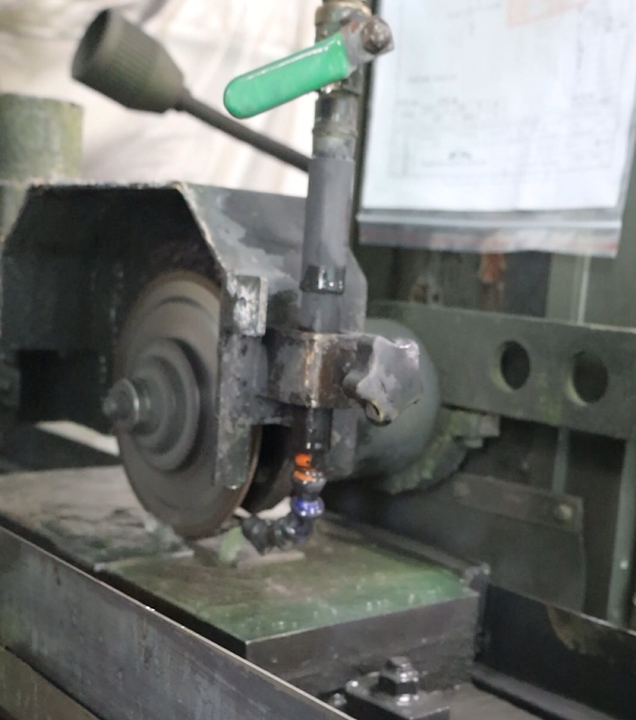
These surfaces can be important for workpiece positioning, clamping and maintaining the intended relationship between different features during subsequent machining.
However, surface grinding is not a mandatory preliminary operation for every precision punch. The need for it depends on the starting condition of the component, the available reference surfaces and the requirements of the drawing.
Where surface grinding is required, its role is to support the overall manufacturing route and provide the appropriate surface condition for the next operation.
6. Profile Grinding: Finishing the Critical Geometry
Profile Grinding is particularly valuable when a punch requires accurately controlled contours, steps, radii or transitions.
Unlike roughing passes that build the basic shape, we use Profile Grinding to finish critical geometries with extreme dimensional and shape control.
During the process, factors such as workpiece positioning, reference relationships, remaining machining allowance and the condition of the grinding wheel all contribute to the result.
The final stage deserves particular attention. When we reach the final stock allowance, we aren’t simply removing material; we are controlling the final geometry. It is to control the remaining material removal in accordance with the required profile.
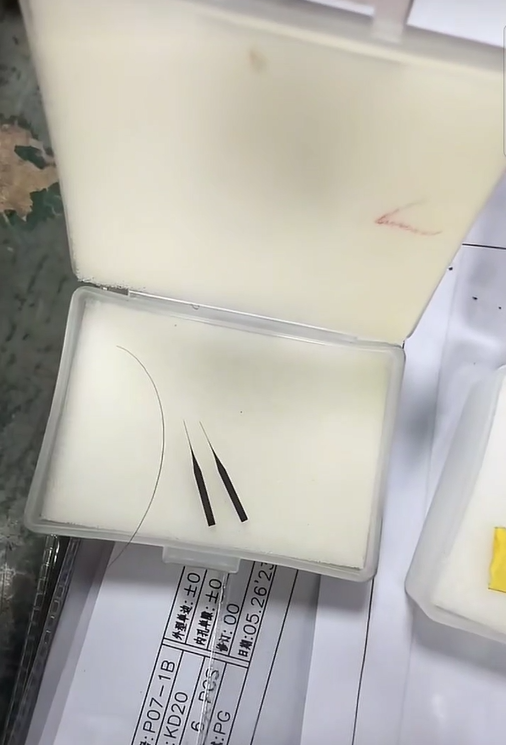
A magnified view of the workpiece allows the operator to observe the profile during grinding and monitor the geometry being produced.
The last few microns are only one part of the process. The final result also depends on the preparation, positioning and machining decisions made earlier.
For precision stamping die punches, this coordinated approach is especially relevant when the drawing specifies small radii, defined transitions or other critical profile features.
7. Final Inspection: Verifying the Finished Profile
A finished component should be evaluated against the applicable drawing requirements, not appearance alone.
Depending on the part, inspection may include:
- Critical dimensions and thickness
- Profile geometry and specified radii
- Flatness and other geometric requirements
- Surface condition where specified
- Relevant mating or functional features
The inspection method should be appropriate for the feature and the required tolerance. We use optical profile measurement, suitable dimensional measuring equipment, and other inspection methods as required.
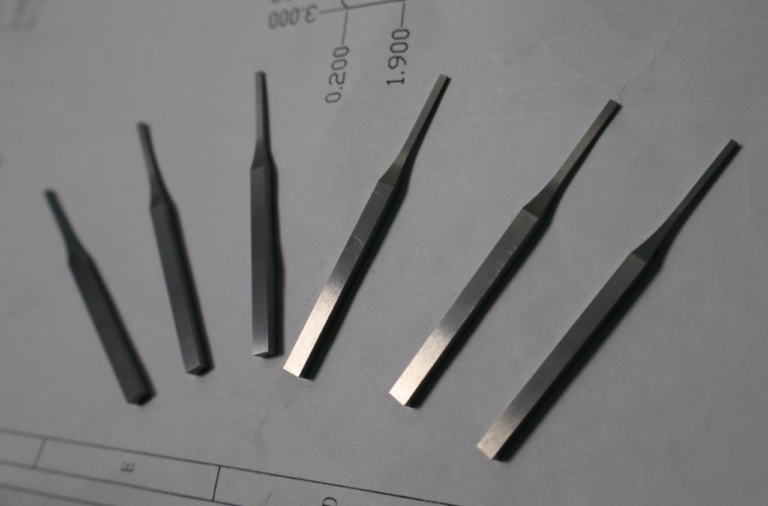
For multi-piece or batch components, our technicians inspect all critical features against the exact drawing specs. Parts that look similar are not necessarily dimensionally identical.
The purpose of final inspection is to verify that the finished component meets its defined requirements.
8. Choosing the Right Process for Precision Stamping Die Components
There is no single manufacturing sequence that suits every precision punch or die insert.
CNC machining, heat treatment, Wire EDM, Sinker EDM, surface grinding and Profile Grinding may each have a role, depending on the material, geometry and technical requirements.
At Hepha Precision, our focus is on Profile Grinding, Wire EDM and precision EDM for stamping die punches, die inserts and other critical precision tooling components. We supporting processes according to the part requirements and the appropriate manufacturing route.
If you have a drawing for a precision punch, die insert or other critical stamping tooling component, we welcome the opportunity to review the geometry and manufacturing requirements.
Send us your drawing to discuss a suitable manufacturing route for your component.

 English
 Korean
 Japanese
 Spanish
 Portuguese
 French
 German