Reliable Precision Subcontractor for Tool Shops








High-Speed Stamping Tool Wear: Why Force Balance and Precision Profile Grinding Matter at 300+ SPM
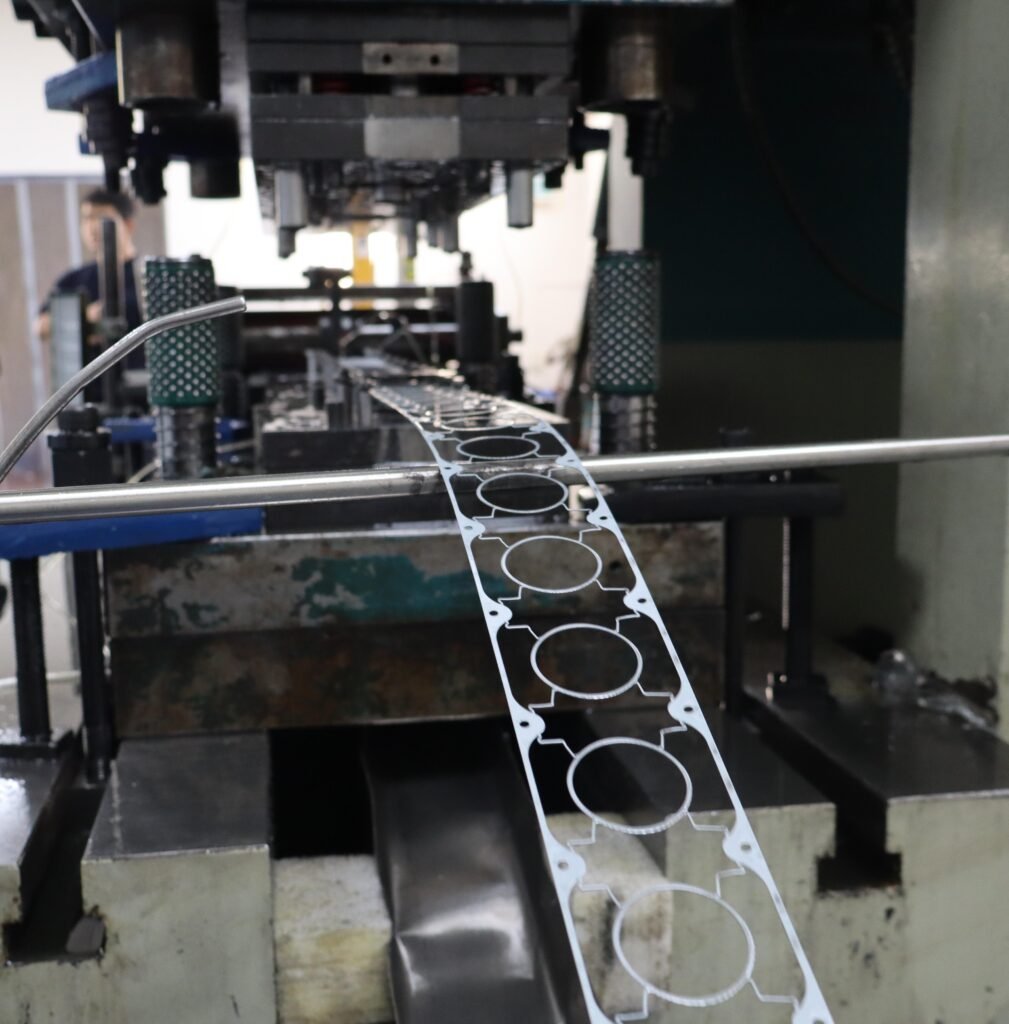
At low stroke rates, stamping can appear deceptively simple: sheet metal, a tool set, and a press.
But once production moves into 300+ strokes per minute, the process stops behaving like a static forming operation and becomes a dynamic mechanical system.
At that speed, stability is no longer a secondary parameter. It becomes the foundation of tool life, part consistency, and overall equipment effectiveness.
In many high-speed environments, premature tool wear, micro-chipping, or inconsistent edge quality are often attributed to material hardness, coating performance, or strip variation.
Yet in practice, the root cause frequently lies elsewhere:
Actually, Force imbalance amplified by microscopic geometric deviations.
High-Speed Stamping Is a Dynamic System
At 300+ SPM, one full press cycle occurs every 0.2 seconds or less.
Acceleration, impact, elastic deformation, and unloading happen in rapid succession.
Under these conditions:
Individually, these deviations may seem insignificant.
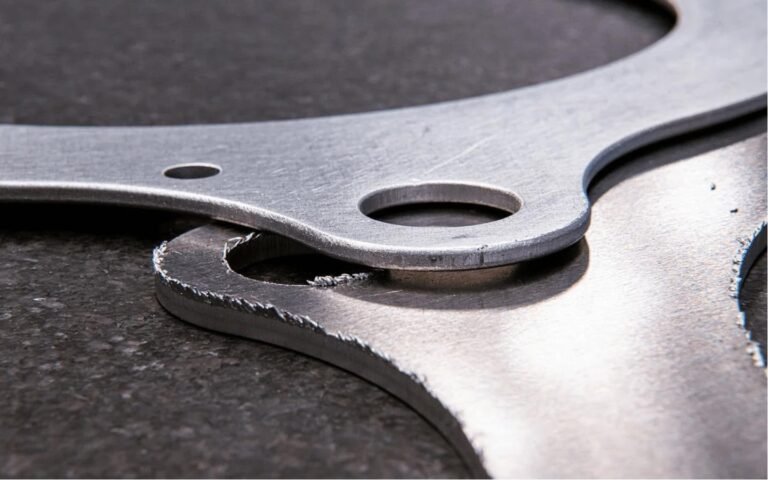
Collectively, across millions of cycles, they accumulate into fatigue cracks, edge chipping, and unstable tool life.
The press does not simply apply force.
It amplifies whatever the geometry introduces.
Hardness Alone Does Not Guarantee Tool Life
Increasing hardness or upgrading material grade can improve wear resistance.
However, in high-speed applications, failure modes are often driven by:
Excessive hardness without geometric stability may even increase brittleness, accelerating edge chipping rather than preventing it.
When force distribution is uneven, peak stress can exceed the average material capacity by a significant margin — even if nominal hardness appears sufficient on paper.
In such cases, the limiting factor is not the material specification.
It is the geometric integrity of the working profile.
Clearance Uniformity and Profile Symmetry
In progressive and high-speed tooling, force balance depends heavily on:
A 5–10 μm deviation in profile form may not be visible in static inspection.
But at high stroke rates, it can shift contact initiation points, alter load distribution, and generate lateral micro-forces that gradually destabilize the process.
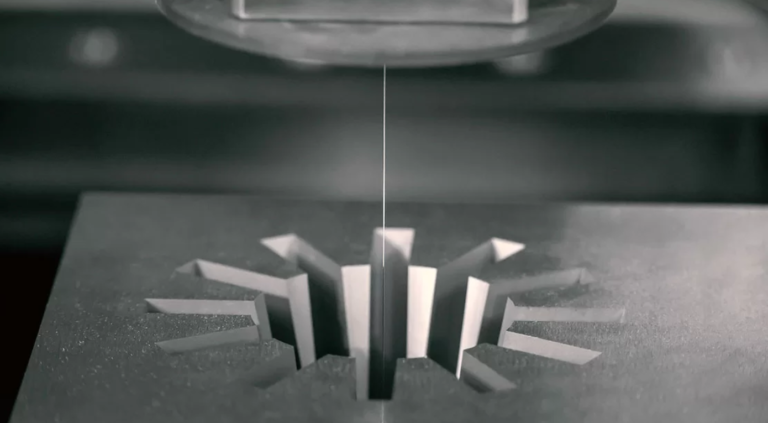
This is where precision profile grinding plays a structural role.
Not as a cosmetic finishing step.
But as a control mechanism for force distribution.
Repeatability Across Tool Life Cycles
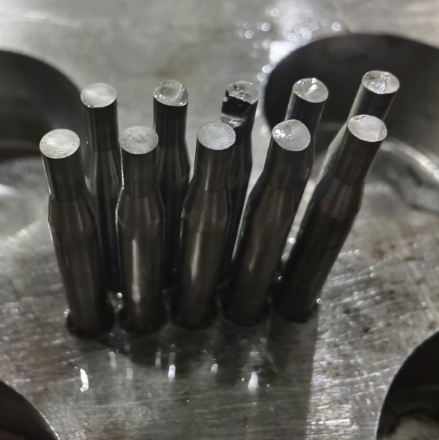
Another critical factor in high-speed environments is spare part interchangeability.
If replacement punches or inserts introduce small geometric variation between batches, force balance shifts subtly. The system must re-stabilize, often through accelerated wear.
True repeatability in profile grinding ensures that:
In high-volume programs, this repeatability is often more valuable than incremental material upgrades.
When Does Precision Profile Grinding Become Critical?
Precision profile grinding becomes structurally important when:
In such cases, reviewing geometric integrity and force balance from a profile perspective can provide insight beyond material or coating changes.
From Drawing Compliance to Production Stability
Meeting drawing tolerances is essential.
But in high-speed stamping, long-term performance depends on how geometry behaves under dynamic load — not only how it measures statically.
If stamping performance depends on force balance,
then force balance begins with profile integrity.
Precision profile grinding, executed with attention to functional geometry rather than nominal numbers alone, can contribute directly to:
For manufacturers operating in high-speed or high-volume stamping environments, geometric stability is not a luxury.
It is a strategic requirement.
Experiencing unstable tool life in high-speed stamping applications?
We support tooling teams with precision profile grinding focused on geometric integrity and repeatability.
Feel free to contact us for a technical discussion.

 English
  Korean
  Japanese
  Spanish
  Portuguese
  French
  German